


Más Información







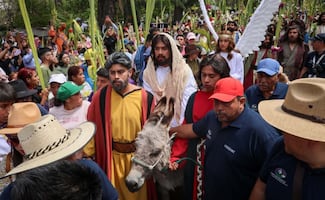
The great cultural richness of indigenous languages in Mexico has weakened substantially and is currently at risk of disappearing, according to a letter addressed to President-elect Andrés Manuel López Obrador , written by experts in the field.
“Mexico has an exceptional linguistic heritage, one of the richest and most diverse in the world,” stated the letter, warning that Mexico’s indigenous languages are “ being displaced by Spanish .”
Signed mainly by anthropologists and linguists, the letter was delivered to López Obrador at a meeting held on Wednesday , according to Dr. José Luis Moctezuma, who is currently engaged in studying the language of the Seri and the Mayo people in the state of Sonora .
In the letter addressed to López Obrador, experts pointed to demographic, political, economic, ideological, and education factors as the cause of a decrease in the use and generational transmission of indigenous languages in the country .
There are officially 68 living indigenous languages in Mexico and there are records of around 8 million speakers of these languages over the age of three, according to the National Institute of Geography and Statistics (INEGI) .
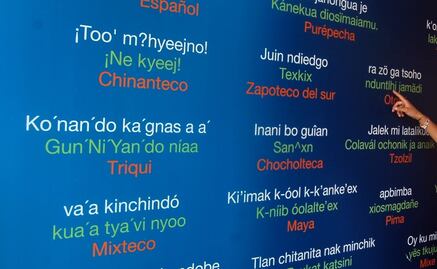
Some of the most widely spoken native languages are Náhuatl, Maya, Chol, Totonac, Mazatec, Mixtec, Zapotec, and Otomi .
As a working paradigm for the problem Mexico’s indigenous languages face, experts stressed that the number of indigenous language speakers in the country had been reduced by 7.6% of the population in 1990 and by 6.5% in 2015 .
They claimed that, in the case of the Mayan language , which had a total of 859,607 speakers in 2015 , mainly in the Yucatán Peninsula , the number of speakers is declining at an alarming rate. Today, only 13% of Mayans between the ages of 3 and 17 speak the language .
They warned that if the Mexican Government’s policies regarding indigenous languages are not “substantially modified,” indigenous languages will “irrevocably disappear in a couple of generations” and, along with them, a heritage of traditional knowledge cultivated by these indigenous groups through the centuries.
After all, languages are “living documents” preserved through their speakers, which hold important information regarding History, biodiversity, and the potential to maintain ancient traditions through literary creation, experts say.
dm

Noticias según tus intereses
[Publicidad]
[Publicidad]