


Más Información
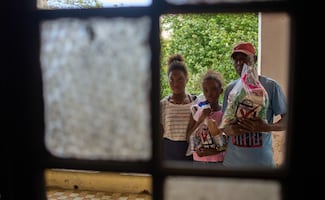







Every day we talk about the situation of migrants , both Mexican and Central American. About the risks they face as they try to reach the United States, about them becoming victims of the abuses of border patrols or criminal gangs, of the nightmare that is crossing the U.S. desert before they can reach urban areas, of the reasons behind their decision to leave their countries of origin, of the families and communities they leave behind.
There are thousands of stories, of reasons and situations, that are hard to understand for those who only read about them in the news through their tablet, computer, or smartphone.
How to connect with what these thousands of people have to go through? Mexican filmmaker Alejandro Gómez Iñárritu resolved to turn the spectator into a part of the situation migrants face every time they cross the scorching desert and are hunted and chased by immigrant hunters. With this idea in mind, a year ago he presented his virtual reality project Flesh and Sand at the Cannes Film Festival .
About his work, Iñárritu has made quite clear it's not a political piece but a human one since immigrants aren't a threat but an opportunity, in addition, that the lives of those who decide to immigrate have been lost and watered down because no one sees them, despite they represent a social crisis.
The project arrived to Mexico last October. Before its opening, González Iñárritu explored several options to finance his project among Mexico's private sector. In a letter published today by EL UNIVERSAL, the Mexican filmmaker regrets he didn't get a positive response from an important foundation to finance the presentation of his project in the United States .
In his letter, he regrets he was denied the opportunity to show unity and support before the accusations of the U.S. President, which have made targets of an unjustified hate our working countrymen, who are in need and vulnerable.
The detail the filmmaker ponders about is what should've been done the minute Donald Trump began to attack immigrants, particularly those of Mexican origin: provide a response based on actions to promote culture, with the unity and support of several Mexican sectors.
In Mexico, many voices have declared their support for migrants – politicians, artists, businessmen – yet often enough they only do so for the sake of their image but when it's time to take action, they do nothing. Regrettable indeed.
am

Noticias según tus intereses
[Publicidad]
[Publicidad]