


Más Información


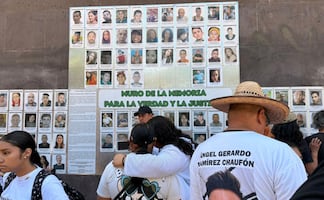


Adults, children, and teenagers disappear in the coastal state of Veracruz at night, at dawn, or at noon as they walk home back from school, from work; as they go or return from a party, as they make a quick stop at a convenience store; they can go missing on a Thursday or a Sunday, or even when they are at home, according to Mexico's National Database of Missing People (RNPED).
Pursuant to this information, Veracruz became, under the Administration of Governor Miguel Ángel Yunes , the second state with the most open missing people cases with a federal file: data gathering closed in December 2017 with a total of 202 cases. Guerrero remains the first one, with 347.
Jorge Winckler, head of the Prosecutor's Office of Veracruz admitted last January before the local Congress, that there are 3,600 cases of missing people in the state.
According to this office, 343 clandestine mass graves have been found since 2011 and 225 bodies, 335 human skulls, and 30,693 human remains have been exhumed from them. Out of these 343 mass graves, 31 were discovered in 2017. Over 9% of them appeared during the current administration, not counting December 2016.
Families look first for their loved ones with friends and other relatives, then at the place where they were last seen, then in hospitals, at public prosecutor's offices, prisons, the coroner's office, and finally, at mass graves.
Whenever there is a new mass grave found, families of the missing go to the location to try and find clues. Like many other of their inquiries, they hit the brick wall of indifference, inefficiency, or plain obstruction of justice by the authorities.
am

Noticias según tus intereses
[Publicidad]
[Publicidad]