[Publicidad]


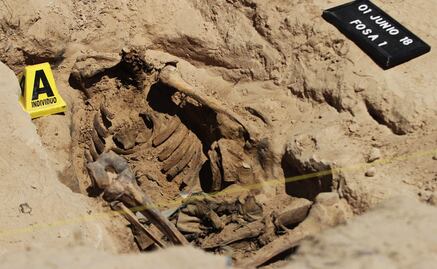
From 2006 to August 14, 2019 , 3,024 clandestine graves have been registered in the country and 4,874 bodies have been found, informed Karla Quintana Osuna , head of the National Search Commission for the Disappeared .
In the morning news conference of President Andrés Manuel López Obrador , the officer informed about the progress regarding the search of missing persons in the frame of the International Day of the Victims of Enforced Disappearances .
Osuna Quintana detailed that the numbers are dynamic and will be modified with the support of the civil society and academia . She highlighted that “ it is not about numbers , but about thousands of persons who are looked after by their families and who are missing from their homes.”
The states with the highest number of clandestine graves are Tamaulipas, Chihuahua, Guerrero, Sinaloa, Zacatecas , and Jalisco . While the years in which more clandestine graves were found were 2006 , 2011 , and 2017 .
From December 1st to August 14th, 2019 , a total of 522 clandestine graves and 671 bodies have been found; Colima, Sinaloa, Jalisco, Sonora , and Chihuahua are the entities that registered the highest number of graves and bodies during the first nine months of the current administration.

From the 671 bodies found, only 200 have been identified , according to information from the state attorney general’s offices, while only 116 have been given back to their families.
“It is the first time that the federal government monitors what happens with the i dentification and delivery of bodies,” highlighted the officer.
Regarding local search commissions , there are seven states in process of their creation: Sonora, Guanajuato, Baja California Sur, Quintana Roo, Guanajuato Aguascalientes, and Chiapas.
To fight the forensic crisis, Quintana Osuna said that a deal was signed with the government of Coahuila to give them MXN $90 million for the creation of a regional Center for Human Identification.
Besides creating forensic cemeteries , there are only two states that have followed the regulation to have progress in this process, which are Zacatecas and Durango .
Along with families, national and international organizations, working sessions are being held for the discussion of an extraordinary forensic mechanism to address the forensic crisis.

[Publicidad]