


Más Información
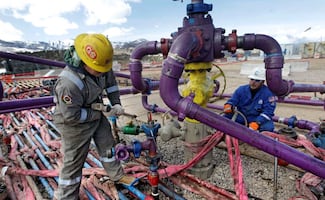






In Mexico , despite its importance as a first-rate strategic resource, the amount of water found in natural reserves and the way groundwater aquifers work remain mostly unknown, as well as the necessary practices for its use and preservation, according to scientists and authorities.
The suspension of Mexico City’s water supply last month for the repair of the Cutzamala water system raised concerns about the future of Mexico’s water supply. José Joel Carrillo Rivera, a geological engineer from the Institute of Geography at Mexico’s National Autonomous University (UNAM) commented: “We have to remember that around 97% of our water reserves are found underground. We need to learn how the groundwater system works though, unfortunately, the subject is not included in the government’s water management schemes.”
As an example, he mentioned the case of the Mexico City aquifer , which has only been explored and studied superficially. “We need to fill that void, because it would allow us to understand the relationship between the groundwater system and the rest of the environmental components such as soil, vegetation, and entire ecosystems, which would shed light on the water quality issues we face today,” stated Carrillo Rivera, co-author of a law initiative for the regulation of subsoil water reserves that was presented before Congress last year .
Mexico’s National Water Commission has registered 653 aquifers, out of which 115 are being over-exploited . Such is the case of aquifers in the Laguna region of Coahuila, Mexico City, the Guadiana Valley in Durango, the Valley of Toluca, Texcoco, and Cuautitlán-Pachuca .
According to Adriana Palma Nava, coordinator of UNAM’s Analysis Group on the Management of the Artificial Recharge of Aquifers in the Water Network , should these aquifers continue to be exploited at the present rate, their reserves will drop and “ within 40 to 50 years, they will exceed our current levels of extraction capacity . Another negative and common effect of the over-exploitation of aquifers in the capital is subsidence , which entails serious political, economic, and social consequences.”
dm

Noticias según tus intereses
[Publicidad]
[Publicidad]