


Más Información








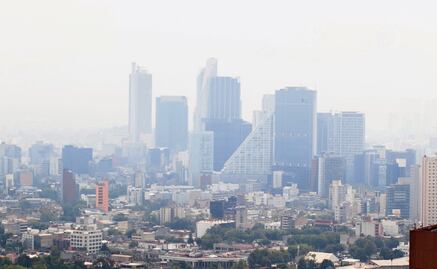
Among Latin American countries , Mexico is the largest greenhouse gasses emitter and the only one from this region that is among the top 15 of the countries that pollute the most , said the UAM .
During the colloquium “Interdisciplinarity in Social Sciences”, held in the institution, Rosa Altamirano and Obdulia Medina explained three possible political strategies to stop the number of emissions.
The strategies mentioned by the two experts are proposed in the General Climate Change Law, declared in 2012, and it's divided into three categories: decentralization, incentives, and direct regulations.
In the first one, the individuals who are directly involved in pollution cases look to solve the problem by themselves, through informal negotiations.
The one based on incentives is focused on taking measures to increase the price the emitters must pay for polluting, that way it will be less profitable.
And the last one, the direct regulation considers public guidelines in order to regulate actions oriented towards solving the problem.
Nevertheless, the experts warn that “although measures have been implemented, there's a lot to do ion this field, long-term strategies are required, with a vision that links scientific research and public policies ”.
The biggest polluter is public transport , with 171 million tonnes emitted; followed by the energy industry 165 million tonnes ; the manufacture and construction industry emits 65 million tonnes .
gm

Noticias según tus intereses
[Publicidad]
[Publicidad]