


Más Información








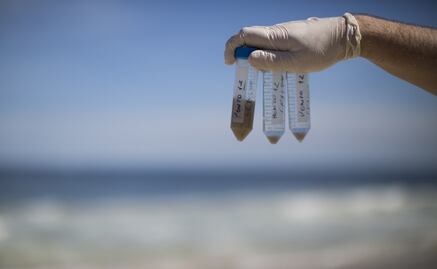
Specialists from the Scientific Research Center of Yucatan (CICY) developed a sensitive, economic, and rapid method to detect fecal contamination and monitor water quality through viral indicators in the Peninsula's karstic aquifer of Yucatan .
Cecilia Hernández Zepeda, director of the Water Sciences Unit of the CICY
, said that this method has already been tested with groundwater discharges in underwater caves or “cenotes,” as well as in brackish water in the coastal zone, where scientists were able to detect various groups of enteric viruses, which cause gastroenteritis in humans.
She explained that the project was part of the 2018 Cohort of the Binational Node of Southeast Innovation (NoBI Southeast) , where, in collaboration with business mentor Fanny de Gante and Ramón Vega , CICY graduate student, interviews were conducted to perfect the method for market commercialization.
"Through these interviews we were able to detect new needs and changes that we had to apply to our technology. All this for the benefit of society, since it allows to prevent gastrointestinal diseases caused by contaminated water," said the main researcher of the project.
dm

Noticias según tus intereses
[Publicidad]
[Publicidad]