


[Publicidad]


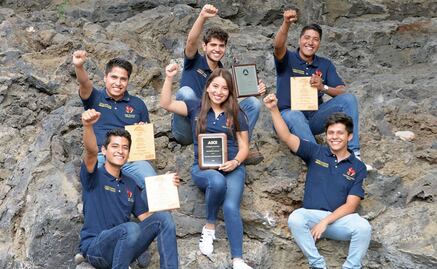
Born in the Mexican state of Sonora , Jaime Sánchez de la Vega , a student from the Arizona State University (ASU) is the chief engineer for a project called “ The Phoenix Cubesat ,” funded by NASA .
The project consists of a nanosatellite designed and developed by ASU students. The device has the capacity to capture thermal images of cities from the Earth’s lower orbit through an infrared detection system. This technology will allow scientists to study the urban-heat-island effect, which mostly results from the modification of land surfaces.

According to the United States Environmental Protection Agency (EPA) , the term "heat island" describes built up areas that are hotter than nearby rural areas. The annual mean air temperature of a city with 1 million people or more can be 1.8–5.4°F (1–3°C) warmer than its surroundings. In the evening, the difference can be as high as 22°F (12°C) .
Heat islands can affect communities by increasing summertime peak energy demand, air conditioning costs, air pollution and greenhouse gas emissions, heat-related illness and mortality, and water quality.
The nanosatellite, which was approved and funded by NASA, is set to be launched from the International Space Station within the next few months.
dm
[Publicidad]

[Publicidad]
Más información

Estados
Universidad Autónoma de Tamaulipas usa inteligencia artificial para agilizar la atención médica; presenta Gabinetes Médicos Inteligentes

Metrópoli
Mauricio Tabe propone elevar a 4% el pago por obras de mitigación; busca que alcaldías las ejecuten

Nación
Empresarios rechazan reforma a Ley Aduanal; especialistas advierten ruptura de acuerdos internacionales

Tendencias
Equinoccio de otoño 2026: ¿cuándo y a qué hora ocurrirá este fenómeno astronómico en México? Esto se sabe