[Publicidad]


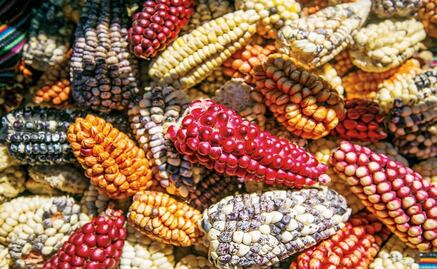
A team of scientists identified the origin of corn domestication , which took place over 6,500 years ago, according to a study published the Science magazine.
The researchers, associated with the Smithsonian Institute , discovered an ancestor of current corn , teosinte , which has similar characteristics to its savage ancestor and which was probably taken from Mexico to South America around 6,500 years ago.
Later, farmers in Mexico and the Amazonian continued improving the crops for thousands of years until the corn was domesticated in each region.
“This work fundamentally changes our understanding of the origins of corn. It shows that it doesn't have a simple origin, that the crop wasn't formed the way we thought,” said the study's co-author, Robin Allaby , from the Warwick University in England.
The plant was probably then adopted as part of the local agriculture, that already cultivated yucca and rice , and it continued its development under the human influence until, thousands of years later, it became a fully domesticated crop , according to the authors.
[Publicidad]
“Since then, domesticated corn moved to the East as part of a general expansion and intensification of agriculture that archeologists have noticed in the region,” explained Logan Kistler, from the Smithsonian .
Kistler's team reconstructed corn 's e volutionary history by carrying out a genetic comparison of over 100 modern corn varieties that grow in the American continent , including 40 recently sequenced varieties.
According to Kistler , understanding the history of corn better “provides the tools to evaluate the future of the crop as the world changes and the agricultural demand increases.”
[Publicidad]
gm

[Publicidad]