


[Publicidad]


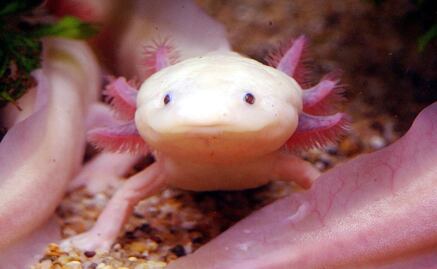
An international group of scientists among which are researchers of the Center for Research and Advanced Studies (CINESTAV) has managed to sequence, for the first time, the genome (DNA) of the axolotl . Experts discovered that this animal, which can only be found in the Valley of Mexico , has a genome 10 times the size of the human being.
The axolotl has the capacity of regenerating its bones, muscles, and nerves from any region of its body that has been amputated. It can even repair its own spinal cord and the tissue of its retina – an ability no other animal possesses to such an extent.
Researchers noticed that after losing a limb, a blood clot quickly stops the bleeding at the site of the injury. Then, a layer of cells covers the injury and this cells mass grows and divides to form a structure known as blastema .
It's believed that blastema cells are the bones, cartilage, and muscles that transform into something similar to stem cells .
This research, published in the Nature magazine, could become the key to tissue regeneration and could translate into medical advances applicable to humans.
am
[Publicidad]

[Publicidad]
Más información

Economía
UNAM advierte sobre retos del presupuesto 2027; aumentar tributación, reducir deuda y déficit, entre ellos

Estados
Cenapred suscribe convenio con especialistas para reforzar monitoreo del volcán Chichonal; buscan establecer sistema de alertamiento temprano

Mundo
Trump regaló 135 mil dólares en efectivo a tres asistentes; desata dudas sobre legalidad de esos pagos

Nación
Delitos sexuales cometidos entre adolescentes no prescribirán tras cumplir 18 años: Corte; busca proteger acceso a la justicia