


Más Información




In 1966, Eleuterio, Mariano, Esteban Mazón, Ermilio, Jacinto, and Pascual Un Noh , landowners of San Felipe , near the Chichen Itzá site, discovered and underground shrine with archeological materials. Shortly after, the archeologist Victor Segovia Pinto visited the site known as Balamkú (Jaguar-god) and conducted an investigation.
However, Segovia Pinto gave instructions to seal off the area. Now, more than 50 years later , Mexico’s Institute of Anthropology and History (INAH) has decided to reopen Balamkú through the Great Mayan Aquifer (GAM) project, led by archeologist Guillermo de Anda . The archeological site will now be available for exploration and research.
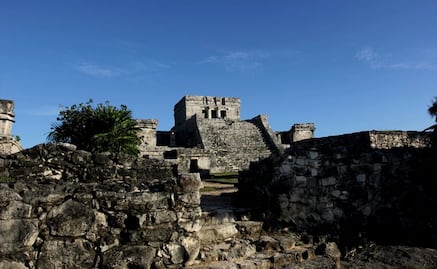
The pyramid of Kukulcán , better known as The Castle , in Chichen Itzá is surrounded by four underwater caves, while the Balamkú underwater shrine is located east of The Castle and is “relatively close to Xkanjuyum .”

Artifacts found in the newly opened archeological site include censers, vases with food remains, jade artifacts, seashells, and bones that were offered to the gods in ancient Mayan rituals.
INAH investigators and archeologists believe that the shrine could date back to the Later Classic Period (700-1,000 A.D.)
The Great Mayan Aquifer project, led by the explorer and archeologist Guillermo de Anda, is made up of 14 researchers, out of which only six have entered Balamkú, where seven offerings and 150 censers have been found, though only one third of the archeological site has been explored so far.
“If there is indeed an underwater cave (cenote) under Chichen Itzá, as has been suggested by historians and archeologists, it could change our perception of the origins of the archeological site,” claimed Guillermo de Anda, adding that human remains were likely to be found in the underwater shrine.
In a press conference, Pedro Sánchez Nava, national archeology coordinator at the INAH , talked about the potential impact of the Mayan Train project in the area: “The train will pass through Chichén, though we still don’t know the project details. I guarantee that the INAH will not allow any archeological sites to become affected by the project’s construction,” he stated.
dm

Noticias según tus intereses
[Publicidad]
[Publicidad]